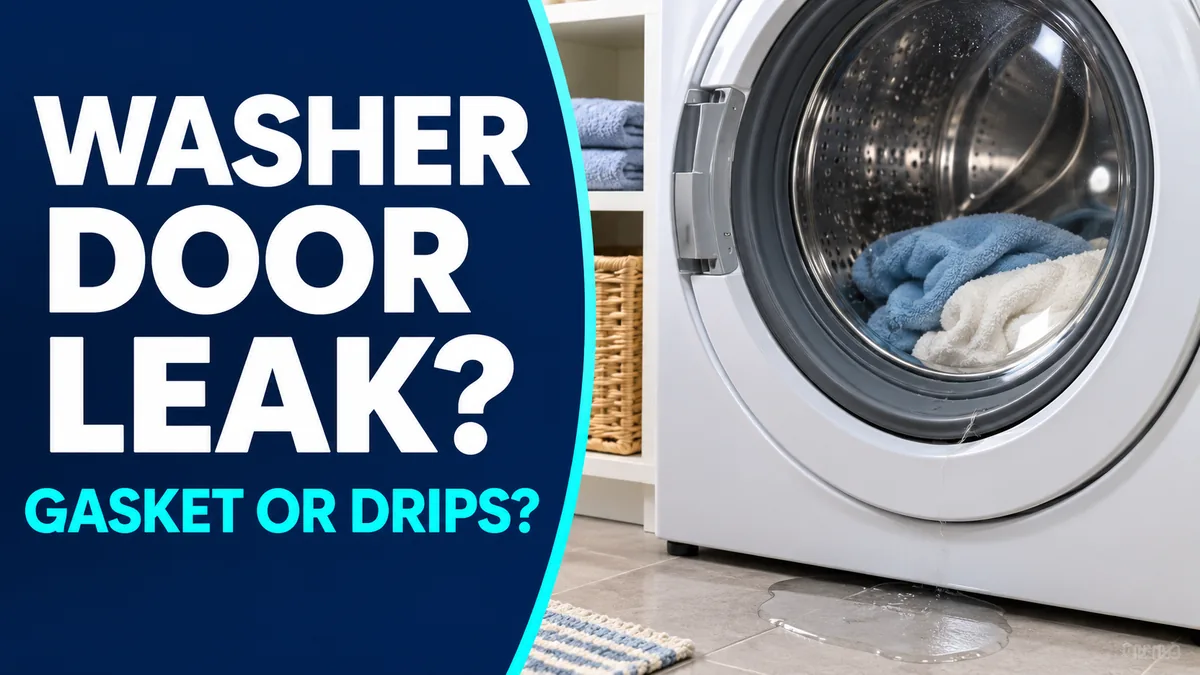
Water dripping from a front-load washer door is not always a failed gasket. A few drops falling from the inside of the glass after the door is opened can be normal residual water; water escaping around a closed door while the cycle runs is a different problem. LG and Samsung both distinguish these situations. If you see an active leak, stop the cycle safely and avoid standing water around electrical equipment. This U.S. guide is for visual observations, not dismantling or leak-reproduction tests. The featured image is a conceptual illustration, not a photograph of a washer inspected or tested by our editors; actual gasket shape and leak paths vary by model.
First separate a post-opening drip from a closed-door leak
Before cleaning or touching the seal, note the exact time and location. Do not restart a leaking washer merely to gather evidence. This four-path matrix is an editorial comparison of official LG and Samsung guidance—not the result of a home experiment.
| What happens? | Evidence without disassembly | Reasonable next step | What it does not prove |
|---|---|---|---|
| A few drops fall only when the door opens after a finished cycle | Closed-door floor was dry; drops came from wet inner glass | Wipe and dry the glass and door rim; check the manual | That the seal is damaged |
| Water appears along the closed door during washing | First wet spot on the lower glass-to-gasket joint; hair or lint visible | Stop safely, then inspect and wipe accessible gasket and glass when idle | That a gasket replacement is automatically required |
| Rubber boot is torn, detached, or visibly distorted | Photograph damage with machine switched off | Do not continue use; arrange authorized service | That adding sealant or tape is safe |
| Wet floor but door rim remains dry | First water appears at rear hose, lower pump-filter flap, dispenser or nearby drain | Use location-specific instructions, not a door-seal repair | That the door is the source merely because water is in front |
What LG and Samsung actually say
Samsung: its U.S. troubleshooting page says some moisture can drip from a front-loading door after it has been opened; a door leak is considered when water drips with the door closed. It advises inspecting the rubber gasket for even a hair or thread and requesting service if the seal is damaged. Samsung U.S. — Washing machine is leaking.
LG: its U.S. help guidance likewise identifies hair, debris or residue between glass and rubber as a possible closed-door leak source. LG distinguishes those from residual moisture on the inner glass after spinning and recommends service for a torn gasket. LG U.S. — Front-load washing machine troubleshooting leaks. LG’s more detailed page also treats drain-filter caps, detergent dispenser and rear hoses as separate leak paths. LG U.S. — Why is my front-load washing machine leaking?.
Safe evidence checklist: a five-field door-leak record
- Cycle state: running / ended / door just opened. Write the time relative to the event, not a guessed cause.
- Door position: closed throughout / opened before the first drop. Do not try to force it or defeat a door lock.
- First wet location: inner glass edge / rubber contact line / lower access flap / rear or side / nearby drain. A puddle’s final location is not necessarily its origin.
- Seal condition, viewed while idle: visible hair, lint, folded clothing, dirt, obvious cut, or none observed. Inspect only accessible areas according to your model manual; do not pull out the boot or remove retaining bands.
- Photo and service question: save a wide view, a close-up of the visible defect, brand and exact model, then ask: “Is this a normal post-opening drip, contamination at the door contact, or damage that needs service?”
Cleaning is not the same as repairing
When the washer is off, cool and safe to approach, wipe visible lint from the accessible rubber seal and inner glass using a soft cloth and your model’s cleaning directions. Do not mix bleach and vinegar or improvise chemical combinations. If rubber is torn, the door will not close correctly, or a leak persists, stop and request service instead of gluing, taping, tightening or bypassing safety interlocks. Excess suds and dispenser overflows have their own paths; location matters.
Two hypothetical records that lead to different decisions
Hypothetical A (not an actual test): A washer completes its spin cycle. The floor is dry before the user opens the door; two drops fall from the inner glass only upon opening. That matches the timing of residual water described by the manufacturers, although other symptoms would change the assessment. Record and wipe the remaining water rather than purchasing a replacement seal immediately.
Hypothetical B (not an actual test): The closed washer door has a visible thin stream along the bottom rubber edge during operation, and a piece of thread is visible there after the washer is safely stopped. This warrants checking the accessible gasket and glass for debris according to the model manual. A torn boot or recurrent leakage calls for professional service, not repeated test cycles.
Do not confuse this with three existing washer leak questions
This page concerns the closed door versus post-opening droplets. For water at the rear inlet-hose connections, use the inlet-hose guide. For seepage at the lower pump-filter access panel after cleaning, follow the two-cap guide. If water rises from the laundry standpipe, see our separate drainage guide. These different first-wet points require different evidence and should not be collapsed into a generic “washer leaking” diagnosis.
When to stop and what to do next
Stop using the appliance if water is pooling near electrical cords or outlets, if the seal is torn, if the door is distorted, or if water continues escaping while closed. Never touch a plug while standing in water; seek qualified help and isolate power only from a safe location. Contact the manufacturer or a qualified service technician with the five-field record, photos and model number. Do not claim that visual clues conclusively identify an internal failure.
Source verification: November 13, 2026 · United States. Manufacturer help instructions are general and may differ by model; this matrix is an independent editorial synthesis of LG and Samsung primary-source guidance, not evidence of an on-site inspection. Neither example describes an actual observed customer case.