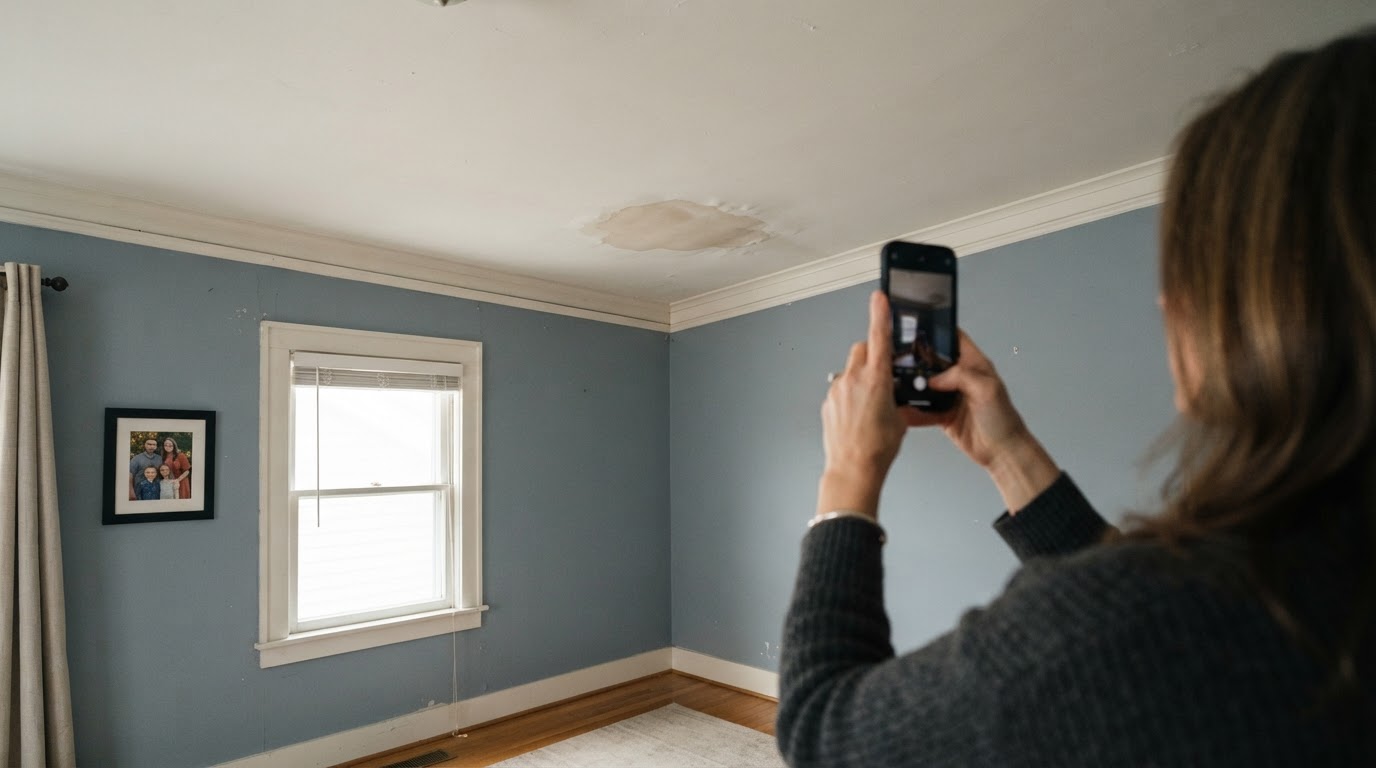
Editorial note: This is a source-based homeowner observation guide, not a diagnosis or a report of a hands-on inspection. Do not cut into a ceiling or touch wet electrical fixtures.
A ceiling stain is a location clue, not a source diagnosis. Rain may enter through a roof, flashing, wall, or window detail, but a plumbing drain, supply line, or air-conditioning condensate line can leave a similar mark. The useful question is whether the water pattern repeats with one event—and what else was operating at that time.
Start with a safety stop
If the ceiling is bulging, sagging, actively dripping near a light, or changing quickly, keep people out of the area. Do not stand beneath it, puncture it, or switch a wet fixture on or off. If water is near electrical equipment, use a safe, dry location to contact the property manager, electrician, or emergency service. The guide to rain-related moisture versus condensation covers a separate window symptom; this article focuses on overhead stains.
Use a timing log instead of guessing
| Observation | What it can suggest | What to record |
|---|---|---|
| Stain grows during or shortly after rain | Roof, flashing, exterior wall, or an opening may be involved | Rain start/stop, wind direction if known, first visible change |
| Drip appears when an upstairs sink, tub, or toilet is used | A drain or nearby plumbing connection may be involved | Fixture and time; whether the symptom occurs after use |
| Moisture appears while cooling runs, even in dry weather | Condensate drainage or HVAC equipment deserves inspection | Thermostat mode and run time; avoid opening equipment |
| Stain remains but does not change | Old damage may persist after the source was repaired | Photo from the same angle and a dated outline of the edge |
These patterns narrow the next question; none proves the cause. A stain can also appear later than the original leak because water travels along framing before reaching the visible surface.
A practical two-event comparison
Hypothetical case A: A resident photographs the same ceiling corner before and after two rain events. The edge darkens after rain but not during a dry week. That is a reason to ask a qualified roofer or building professional to inspect the exterior water path—not proof of a roof defect.
Hypothetical case B: Another resident sees a small drip only after a bathtub is drained, with no rain correlation. They stop using the fixture and arrange a plumbing inspection. They do not run repeated “tests” that could worsen hidden damage.
Make the handoff useful
- Photograph the stain from the same position with a date and a size reference.
- Record rain and fixture/HVAC events separately for a few days, if safe.
- Note whether the surface feels damp without pressing or probing it.
- Share the log, photos, and any ceiling changes with the landlord, insurer, or licensed trade.
EPA advises fixing the moisture source and drying wet materials promptly; its guidance notes that drying wet areas within 24–48 hours prevents mold growth in most cases. Extensive damage, contaminated water, hidden moisture, or health concerns call for a qualified professional. The visible stain alone cannot tell you whether drywall is dry behind the paint.
Sources and limits
Reviewed November 18, 2026. Weather, construction, and local codes differ; this guide is for observation and referral, not structural or electrical repair instructions.
Leave a Reply